

7 Benefits of Small Batch Coffee Roasting
Last Updated: November 22, 2026
Quick Summary
Small batch coffee roasting means roasting a few pounds to a few dozen pounds per batch, which gives the roastmaster tighter control over temperature, airflow, and timing than high-volume commercial roasting allows. That control preserves flavor clarity, origin characteristics, and freshness, and it supports a roast-to-order model. Small batches also make quality control and experimentation easier, though they cost more per pound.
- Small production drum roasters commonly run 5 to 30 pounds per batch, while commercial roasters often run 100 to 300 pounds or more.
- A smaller mass of beans responds to heat changes within seconds, letting the roastmaster hit a precise roast profile.
- Coffee is at its best in the weeks after the roast date, so look for a printed roast date rather than a best-by date.
- Store beans in an airtight, opaque container at room temperature, away from light, heat, and moisture, and grind just before brewing.
- Small batches cost more per pound because the roaster spends more time and labor on less coffee.
Table of Contents
- What Small Batch Coffee Roasting Actually Means
- How Batch Size Varies From Roaster to Roaster
- The Coffee Roasting Process, Step by Step
-
7 Benefits of Small Batch Coffee Roasting
- 1. Greater Control Over Roast Temperature and Timing
- 2. Clearer Flavor, Aroma, and Acidity
- 3. Origin Characteristics Stay Intact
- 4. Fresher Coffee, From Roast Date to Cup
- 5. Tighter Quality Control and Consistency
- 6. Traceability and Sourcing Transparency
- 7. Flexibility for Seasonal and Experimental Roasts
- Small-Batch Coffee vs. Commercial Coffee: What the Difference Is
- How to Read a Coffee Roast Date (and Judge Freshness at Home)
- How to Store Coffee Beans So Freshness Lasts
- Where Small-Batch Roasting Has Limits
- Find Your Perfect Roast at Eden's Garden Coffee
- Frequently Asked Questions
What Small Batch Coffee Roasting Actually Means
Small batch coffee roasting is the practice of roasting relatively small quantities of green coffee at a time, giving the roastmaster tighter control over temperature, airflow, and timing than a high-volume commercial roaster allows. Roasting to order is about control, and that control is what separates a memorable cup from a forgettable one.
Batch size is the whole story here, so let's define it. A "small batch" typically means anywhere from a few pounds to a few dozen pounds per roast, while commercial roasters run batches measured in hundreds of pounds. That difference in scale changes everything about how much attention each bean receives. Below, we'll walk through the roasting process, seven concrete benefits of small batch coffee roasting, and the trade-offs nobody mentions.
How Batch Size Varies From Roaster to Roaster
There is no universal cutoff for "small batch," and that ambiguity causes real confusion for shoppers. A neighborhood roaster might call 25 pounds a small batch. A larger specialty operation might call 50 pounds small. The honest definition is relative: small batch means the roaster can personally monitor and adjust each roast rather than relying on automated volume production.
A useful way to think about it is by drum capacity rather than by a single number. Most countertop and sample roasters hold roughly 1 to 5 pounds of green coffee per charge. Small production drum roasters commonly run 5 to 30 pounds per batch. High-volume commercial roasters often run 100 to 300 pounds or more per batch, and some industrial systems exceed that.
Why does the number matter mechanically?
A common mistake is assuming the label guarantees quality. What matters is how the roaster uses the control that a small batch affords. Ask these questions before you buy:
- How many pounds go in the drum per batch?
- Who watches the roast, and do they log bean temperature and development time?
- Is the roast date printed, and how soon after roasting does the coffee ship?
- Does the roaster cup each batch and adjust the next one?
- Can they tell you the farm, cooperative, or region behind the lot?
Batch sizes by roaster type
The Coffee Roasting Process, Step by Step
The coffee roasting process turns dense, green coffee into the aromatic brown beans you brew. Heat, airflow, and time drive a series of chemical changes that shape the final flavor.
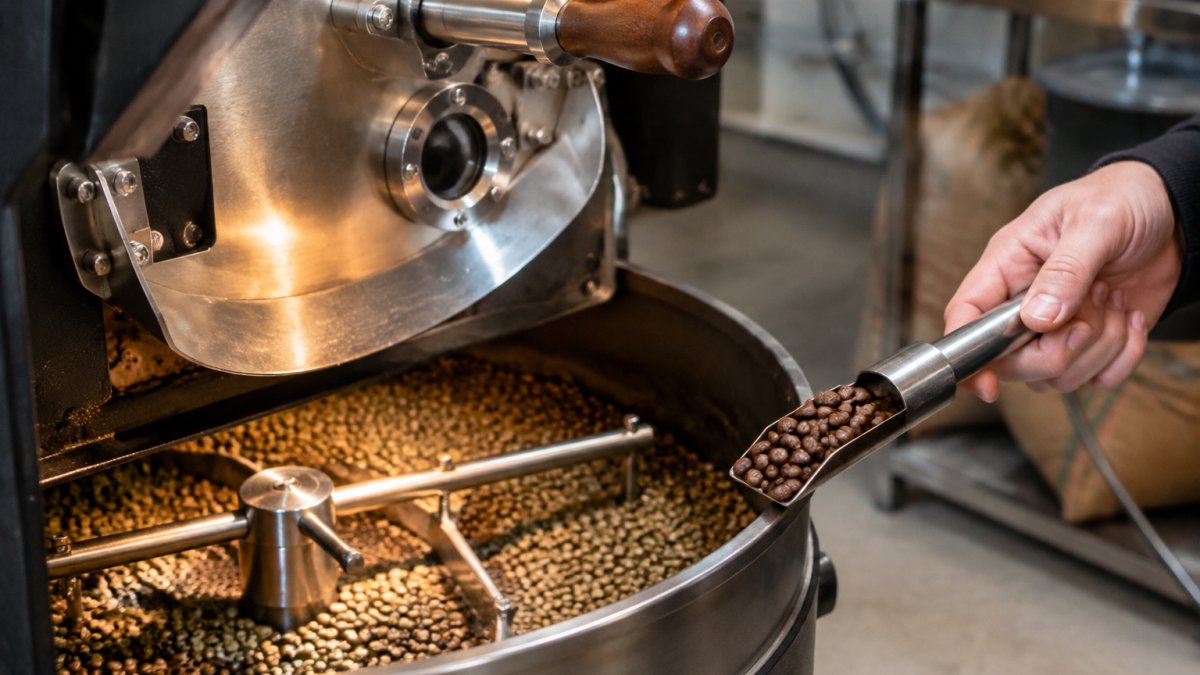
Here is how a roast unfolds:
- Green bean inspection. The roastmaster checks the raw beans for defects before anything hits the drum.
- Charge and drying phase. Beans enter the hot drum and lose moisture as they heat.
- First crack. The beans audibly pop as internal pressure releases, marking the start of roast development.
- Development. The roastmaster fine-tunes temperature and timing to build sweetness, acidity, and body.
- Cooling and resting. Beans cool quickly to halt the roast, then rest before packaging.
Each stage involves temperature adjustments and judgment calls. In a small batch, those calls happen bean by bean, minute by minute.
7 Benefits of Small Batch Coffee Roasting
The benefits of small batch coffee roasting come down to control, freshness, and care. Each of the seven below builds on the others, and together they explain why specialty roasters keep their batches small even when it costs them volume.
1. Greater Control Over Roast Temperature and Timing
A smaller mass of beans responds faster to heat changes. The roastmaster can nudge temperature up or down and see the result within seconds, not minutes. That responsiveness lets them hit a precise roast profile instead of settling for an average.
2. Clearer Flavor, Aroma, and Acidity
Tighter control translates into flavor clarity. When you can steer roast development, you can preserve the acidity and sweetness that make a coffee interesting rather than flattening them under a dark, uniform roast. Aroma arrives more vivid in the cup, too.
3. Origin Characteristics Stay Intact
A single-origin coffee carries the signature of its soil, altitude, and processing. Small batch roasting protects those origin characteristics instead of burying them.
If you want to see that principle in the cup, our Ethiopia Natural shows what careful roasting does with fruit-forward heirloom beans, and the Colombia Single Origin Coffee offers a balanced, chocolate-and-citrus profile that rewards a gentle medium roast.
4. Fresher Coffee, From Roast Date to Cup
Freshness is the benefit most shoppers care about, and small batch roasting supports a roast-to-order model. Coffee is at its best in the weeks after the roast date.
5. Tighter Quality Control and Consistency
Quality control is easier when you can inspect every batch. The roastmaster cups samples, logs results, and adjusts the next roast. That feedback loop builds consistency across batches, so your favorite coffee tastes like your favorite coffee each time you reorder.
6. Traceability and Sourcing Transparency
Our product listings include details such as region, altitude, and grower where available.
7. Flexibility for Seasonal and Experimental Roasts
Small batches make experimentation affordable. A roaster can trial a new seasonal roast, tweak a roast profile, or run a limited lot without committing to a huge volume. That flexibility is how distinctive coffees reach your door, like our Whiskey Barrel Aged option for anyone who wants something unusual from a small batch.
Small-Batch Coffee vs. Commercial Coffee: What the Difference Is
Small-batch coffee vs. commercial coffee comes down to scale, monitoring, and freshness. Commercial roasting prioritizes volume, uniformity, and shelf life. Small-batch roasting prioritizes control, character, and time from roast to delivery.
| Factor | Small-Batch Roasting | Commercial Roasting |
|---|---|---|
| Batch size | A few pounds to a few dozen | Hundreds of pounds |
| Monitoring | Hands-on, per-roast adjustments | Largely automated |
| Roast date | Often printed, ships fresh | Rarely printed |
| Flavor focus | Origin character, complexity | Uniform, predictable |
| Flexibility | High, easy to experiment | Low, built for volume |
Neither approach is wrong. They simply serve different goals, and knowing which one you're buying helps you judge whether the price makes sense.
How to Read a Coffee Roast Date (and Judge Freshness at Home)
The roast date is a useful number on a bag and is worth looking for alongside any best-by date. A best-by date tells you when coffee stops being safe to sell. A roast date tells you when it peaked.
Freshness is not a single moment; it is a curve. Right after roasting, coffee releases carbon dioxide in a process called degassing (pubmed.ncbi.nlm.nih.gov). Brew too soon and the escaping gas disrupts extraction, producing a flat or foamy cup.
To judge freshness at home:
-
Check for a printed roast date, not just a best-by date
-
Note how many days passed between roast and delivery
-
Smell the beans when you open the bag; fresh coffee releases noticeable aroma
-
Look for a dull, matte surface on very old beans, and for oily sheen on beans that were roasted dark and have since aged
-
Taste a cup black before adding milk or sugar
A common mistake is trusting the supermarket bag. Those bags often carry no roast date at all, which means you have no way to know how long the coffee sat before it reached the shelf.
Storing coffee beans well protects the freshness you paid for.
How to Store Coffee Beans So Freshness Lasts
Storing coffee beans well protects the freshness you paid for. Keep beans in an airtight container away from light, heat, and moisture, and store them at room temperature rather than in the fridge. Whole beans stay fresher longer than pre-ground coffee, so grind just before brewing.
Buy in amounts you'll finish within a few weeks. A large bag that goes stale is no bargain. For a single-origin lot you love, order smaller and reorder more often.
Where Small-Batch Roasting Has Limits
Small batch roasting is not automatically better coffee. A 2020 study on coffee roasting technologies and their effects on cup quality and bioactive compounds examined how roasting changes compounds in the bean, but it did not compare small and large batches head to head. There is no solid evidence that a small batch alone guarantees a superior cup.
Watch out: a roaster can run small batches and still roast poorly. Scale is an opportunity for care, not a substitute for skill. Small batches also cost more per pound, since the roaster spends more time and labor on less coffee. If budget is tight, that premium may not be worth it for every cup. And some coffees, like a gentle Peru Decaf, are better judged on how they taste than on batch size alone.
Find Your Perfect Roast at Eden's Garden Coffee
Choosing well comes down to matching a roast to how you brew and what you enjoy. Start with a single origin if you want to taste a place, or a blend if you want an easy everyday cup.
We roast to order so your beans arrive close to their peak, and we source carefully so each lot has a story worth telling. If you're not sure where to begin, our House Blend is a straightforward starting point for a daily cup.
Ready to taste the difference that careful, small batch roasting makes? At Eden's Garden Coffee, we roast to order for maximum freshness, source beans from trusted farms, and offer single origins, blends, and flavored coffees to suit every ritual.
Frequently Asked Questions
What are the benefits of small batch coffee roasting?
Small batch coffee roasting gives a roaster tighter control over roast temperature and timing, so each roast profile can be adjusted to the beans rather than averaged across a huge load. Small batches can allow closer attention to each roast. It is not an automatic guarantee of better taste, but it removes several common causes of stale or muddy coffee.
Is small batch coffee fresher than mass-produced coffee?
Often, yes, but check the bag. Supermarket coffee can sit in a warehouse and on a shelf for months, and many bags carry only a best-by date. Look for a printed roast date, and buy in amounts you will finish in about a month. Freshness still depends on how the beans are stored once they reach you.
How do I store coffee beans to keep small batch coffee tasting fresh?
Keep beans whole until you brew, and store them in an airtight, opaque container at room temperature, away from the stove, oven, and sunlight. Buy in quantities you will use within about a month. Avoid the refrigerator, where moisture and food odors migrate into the beans, and avoid the freezer unless you portion beans into sealed bags and thaw them once without refreezing. Grinding right before brewing makes a bigger difference to flavor clarity than most storage upgrades.
How can you tell if coffee was roasted in small batches?
Start with the roast date, not the best-by date, since a specific day printed on the bag signals roast-to-order production. Look for named farms, cooperatives, regions, altitudes, varieties, and processing methods such as fully washed or natural, which small batch roasters usually publish because they buy specific lots. Tasting notes that match what you actually taste, rather than generic words like smooth or premium, are another sign. Finally, limited seasonal offerings and small size options suggest batch sizes that turn over quickly.
