

Does Mushroom Coffee Really Boost Energy?
Quick Summary
Mushroom coffee often delivers less caffeine than a standard cup, which can feel smoother, but the mushrooms' own energy effects are not well proven. Human research on species like lion's mane, cordyceps and reishi is still thin, so mushroom coffee energy benefits remain largely unconfirmed.
- Mushroom coffee usually contains less caffeine than regular coffee, since part of each serving is mushroom powder.
- Typical blends deliver roughly 40 to 80 mg of caffeine per 8 oz serving, depending on the product.
- Human evidence for energy and focus effects from the mushrooms is limited.
- Check labels for a stated caffeine amount, the serving size, and the coffee-to-mushroom ratio.
- Give a product two to three weeks of morning use and judge by how you feel.
Table of Contents
- Does Mushroom Coffee Really Boost Energy?
- What Mushroom Coffee Is and How It Is Made
- The Benefits of Drinking Mushroom Coffee for Energy in the Morning
- How Much Caffeine Is in Mushroom Coffee Compared With Regular Coffee
- Does Mushroom Coffee Help With Cortisol and Stress?
- The Pros and Cons of Mushroom Coffee
- Mushroom Coffee Side Effects and Who Should Be Careful
- Choosing a Mushroom Coffee to Try This Week
- Frequently Asked Questions
Does Mushroom Coffee Really Boost Energy?
Last Updated: November 21, 2026
Mushroom coffee is a blend of ground coffee and powdered functional mushrooms, and it is often sold on the promise of steady energy without the jitters, which is why many people now search for mushroom coffee energy options. At Eden's Garden Coffee, we roast our beans to order and sell a three-mushroom blend, so we get asked this question often. The honest answer is that mushroom coffee often contains less caffeine than a typical cup, and the research on the mushrooms themselves is still thin. Below, we separate what the evidence supports from what the marketing claims, and we show you how to choose a bag that fits your morning.
What Mushroom Coffee Is and How It Is Made
Mushroom coffee is typically a blend of roasted coffee and mushroom powder, usually from species such as lion's mane, cordyceps and reishi. Producers either mix the powder into ground beans or dissolve it into instant coffee. Some blends use mushroom extracts instead of whole powder, which changes the flavor and the amount of material in each cup.
The Benefits of Drinking Mushroom Coffee for Energy in the Morning
Most people who drink mushroom coffee in the morning are looking for mushroom coffee energy that does not come with a crash. The main reasons people give are a lower caffeine dose and a mellower feel. Whether the mushrooms add energy of their own is a different question, and the evidence is limited.

Lower Caffeine and a Smoother Lift
Mushroom coffee is usually made with fewer coffee beans per cup, so it generally delivers less caffeine than a standard brew. For many drinkers, that gentler dose is the main reason to switch. A smaller caffeine load can feel smoother, though individual tolerance varies widely.
Cordyceps, Lion's Mane and Reishi Compared
Each mushroom in a blend is marketed for a different effect. Cordyceps is most often linked to physical endurance in marketing, and human evidence for that effect is limited. Lion's mane and reishi are promoted more for focus and calm, but human evidence for those specific effects is also limited.
How Much Caffeine Is in Mushroom Coffee Compared With Regular Coffee
Mushroom coffee generally contains less caffeine than regular coffee because part of each serving is mushroom powder rather than coffee, but the size of that difference depends entirely on the ratio in the product, and the ratio varies widely from brand to brand. There is no single caffeine number for "mushroom coffee," so treat any blanket claim with suspicion.
Reference points for a standard cup
To compare fairly, you need a baseline. Widely cited figures from the USDA and mainstream health publishers put the caffeine in common drinks in roughly these ranges per serving:
- Brewed coffee (8 oz): about 95 mg, though it can range from roughly 70 to 140 mg depending on grind, roast, and brew strength.
- Espresso (1 oz shot): about 64 mg.
- Decaf brewed coffee (8 oz): about 2 to 5 mg.
- Black tea (8 oz): about 47 mg.
- Green tea (8 oz): about 28 mg.
These are reference ranges, not guarantees. A dark roast does not have more caffeine than a light roast by weight, if anything, the opposite is often true, and a coarse grind or a weak brew can pull the number well below the label average.
Where mushroom coffee usually lands
Most mushroom coffee products fall somewhere between a weak cup of regular coffee and a strong cup of tea. A common pattern is a blend that delivers roughly 40 to 80 mg of caffeine per 8 oz serving, because the coffee portion is diluted with mushroom powder. Instant mushroom coffee sachets are often on the lower end, sometimes closer to 30 to 50 mg, while a ground mushroom-coffee blend brewed strong can approach a standard cup. Some products add extra caffeine (from green tea or guarana) and can exceed regular coffee, so the "gentler" reputation is a tendency, not a rule.
Watch out: a product marketed as "mushroom coffee" may contain mostly coffee with a token amount of mushroom powder, or mostly mushroom with very little coffee. The order of ingredients on the label tells you which is which.
How to read the label for caffeine
- Look for a stated caffeine amount per serving. Reputable brands publish it; if a brand does not, assume the number is on the higher side of the range above.
- Check the serving size. A 12 oz mug made from a single-serve sachet is not the same dose as a 6 oz cup from a ground blend.
- Check for added caffeine sources. Green tea extract, guarana, and added caffeine isolate can push a "mushroom" product above regular coffee.
- Check the coffee-to-mushroom ratio. A blend that lists coffee first is mostly coffee; one that lists mushroom extract first is mostly mushroom.
Why the lower dose can feel smoother
Caffeine's effect on the body is dose-dependent. A smaller dose is less likely to produce the rapid spike and subsequent dip that some people associate with a strong cup of coffee, and it is less likely to trigger jitters in people who are sensitive. That smoother feel is a real effect of a lower dose, but it is not the same thing as the mushrooms adding energy. If you want a precise comparison for the bag in your hand, use the label's stated caffeine per serving and compare it against the reference ranges above.
Caffeine per 8 oz serving: standard cup vs. mushroom coffee
Does Mushroom Coffee Help With Cortisol and Stress?
Adaptogens are a common marketing theme for mushroom coffee, and the evidence supporting stress benefits is preliminary and indirect. Stress and cortisol are shaped by sleep, workload, relationships, and health status, so a coffee alone is unlikely to change them in a measurable way.
What the evidence actually covers
Most of the human research on adaptogenic mushrooms has studied concentrated extracts of a single species, not finished mushroom-coffee products. That distinction matters: a study of a reishi extract at a specific dose does not tell you what a spoonful of mushroom-coffee powder will do. A few small human trials have looked at reishi and lion's mane extracts for stress, mood, and sleep quality, and some report modest improvements, but sample sizes are small and results are mixed. Cordyceps research is mostly about physical performance and fatigue rather than cortisol. Treat species-level findings as suggestive, and treat claims about the finished drink as unproven.
Species-by-species expectations
- Reishi: The species most often studied for calm and sleep, and the one most associated with stress claims. Human evidence is limited but the direction of the preliminary findings is toward relaxation rather than stimulation.
- Lion's mane: Marketed for focus and mood; early human studies are small and mostly about cognition, not cortisol.
- Cordyceps: Marketed for physical energy and endurance; the research is about performance and fatigue, not stress hormones.
- Chaga: Marketed mainly for antioxidant content; little human evidence on stress.
A blend that contains several species at low doses is not equivalent to a high dose of any one of them. If stress support is your main goal, a single-species extract with a stated dose is easier to evaluate than a multi-mushroom blend.
The caffeine side of the stress question
Caffeine itself raises cortisol acutely, especially in people who are not habitual users, and can worsen anxiety and disrupt sleep in sensitive individuals (Caffeine Stimulation of Cortisol Secretion Across the Waking Hours in Relation to...). That means a lower-caffeine mushroom coffee may feel calmer than a strong regular coffee for a reason that has nothing to do with adaptogens, the caffeine dose is smaller. If you are using mushroom coffee to manage stress, pay attention to total daily caffeine as much as to the mushroom content.
Who should be cautious
If you are pregnant or nursing, managing a medical condition, or taking medication, talk to your healthcare provider before adding a functional mushroom product to your routine. Some mushrooms can interact with blood thinners, immunosuppressants, and diabetes medications, and the evidence on long-term use in these groups is thin. People sensitive to caffeine should also watch how they feel, because a lower dose still adds to the total you consume across the day.
A realistic way to judge it
Give a product two to three weeks of consistent morning use and judge by how you feel, sleep quality, afternoon energy, and jitteriness, rather than by the label. If you notice no difference, the mushrooms are not doing measurable work for you, and the lower caffeine dose is likely the real benefit.
The Pros and Cons of Mushroom Coffee
Pros
- Often lower in caffeine than regular coffee, which can mean a smoother lift
- A familiar coffee flavor with an earthy, savory note from the mushrooms
- Simple to prepare, especially in the instant format
Cons
- Human evidence for energy and focus effects is limited
- Some brands make health claims that lack solid scientific support
- Mushroom coffee costs more per cup than a basic bag of beans
The main trade-offs are easier to scan side by side:
| Pro | Con |
|---|---|
| Often lower in caffeine than regular coffee | Human evidence for energy and focus is limited |
| Familiar coffee flavor with an earthy note | Some brands make health claims without solid support |
| Simple to prepare, especially instant | Costs more per cup than basic beans |
Mushroom Coffee Side Effects and Who Should Be Careful
Most people tolerate mushroom coffee well, but a few groups should check with a doctor first. If you are pregnant, nursing, managing a medical condition or taking medication, talk to your healthcare provider before adding a functional mushroom product to your routine. People sensitive to caffeine should also watch how they feel, because a lower dose still adds to the total you consume across the day.
Choosing a Mushroom Coffee to Try This Week
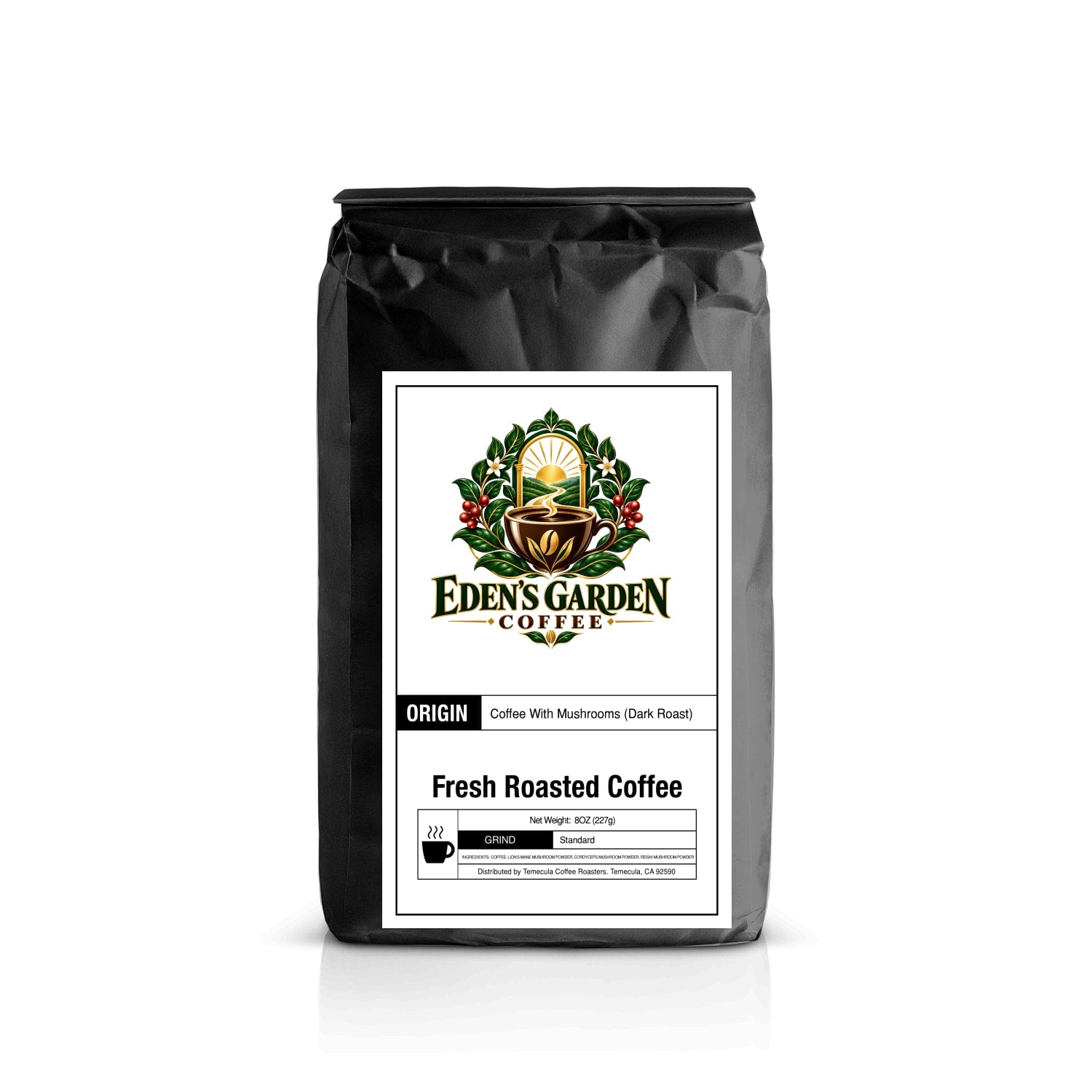
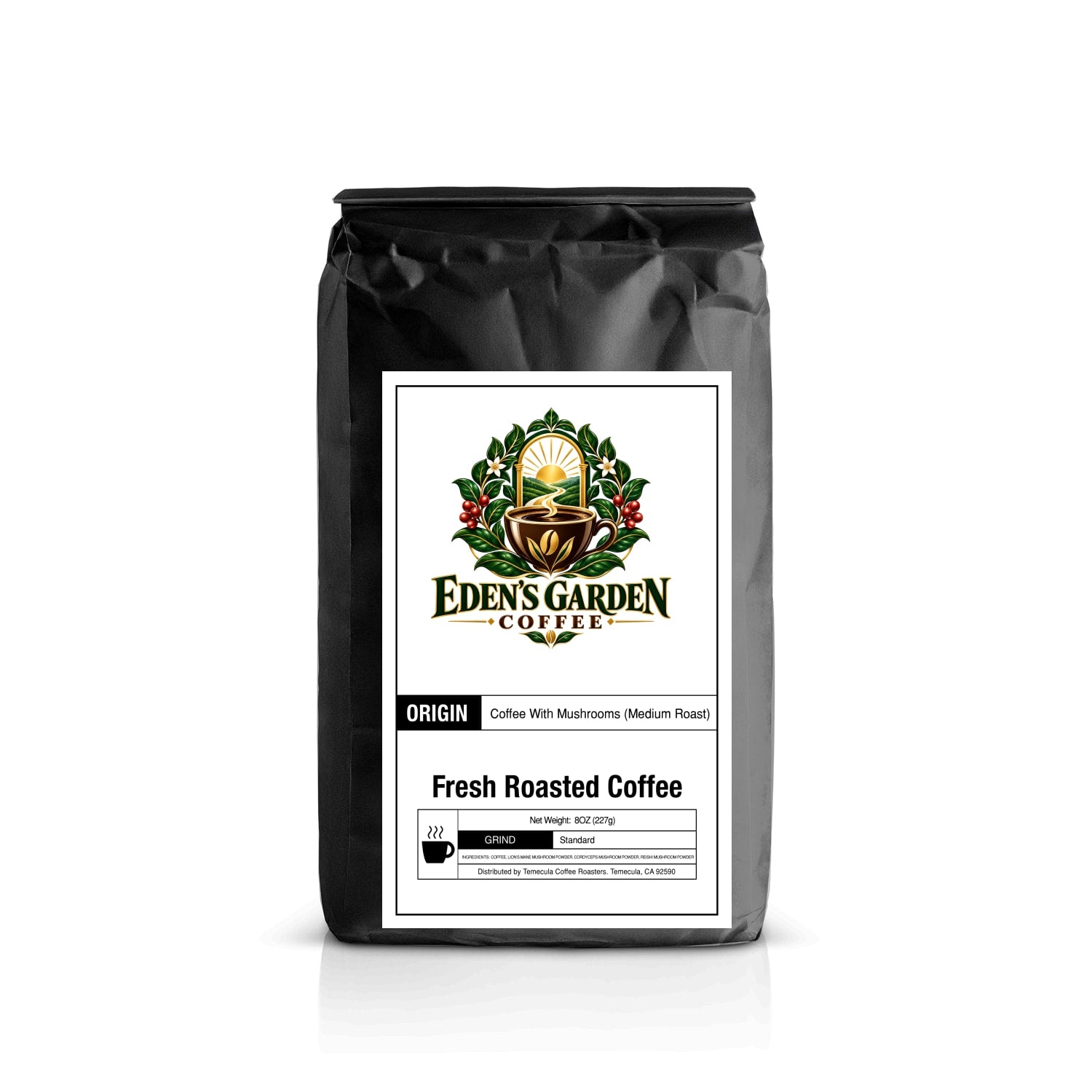
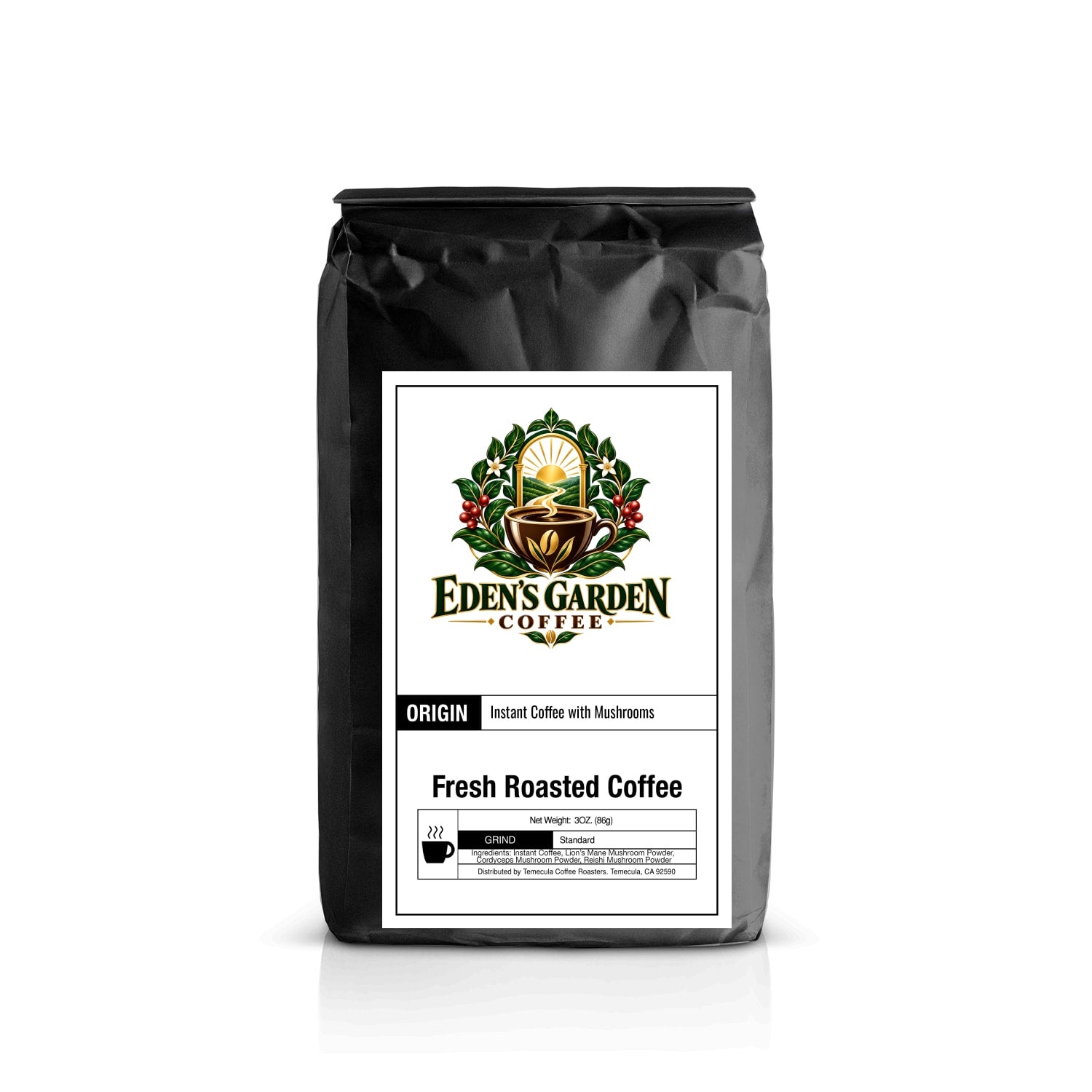
If you want to test the idea, start with a blend you will enjoy on its own taste. Our Coffee with Mushrooms Dark Roast and Coffee with Mushrooms Medium Roast are both available at $20.99. For a quick, convenient option, the Instant Coffee with Mushroom is a simple way to try the blend, and each package provides about 42 servings at $20.99.
Frequently Asked Questions
Does mushroom coffee actually give you energy?
Mushroom coffee usually contains caffeine, so it can give you a lift. Human studies on energy outcomes for mushroom coffee are limited. Many people find the energy feels smoother than regular coffee, though individual response varies. If you want a noticeable boost, check the caffeine content on the label and compare it with your usual cup.
How much caffeine is in mushroom coffee compared with regular coffee?
Caffeine content depends on how much actual coffee is in the blend. Many mushroom coffees use less coffee per cup and therefore contain less caffeine than a standard brewed cup, which typically delivers around 95 milligrams. Check the serving size and caffeine information on the packaging, and compare it with the coffee you normally drink.
What happens if I drink mushroom coffee every day?
If the coffee contains caffeine, daily use can still lead to dependence, sleep disruption or jitters if you drink several cups. Because the mushroom evidence is limited, do not expect large, lasting changes from daily use alone. Pay attention to how you sleep and feel, and speak with a clinician if you take medications or have a health condition.
Can mushroom coffee cause side effects?
People with medical conditions or who take medication should talk with a doctor before adding it to their routine.
