

7 Ways to Improve Home Coffee Flavor
Last Updated: October 25, 2026
Quick Summary
Improve home coffee flavor by buying beans with a recent roast date, matching grind size to your brew method, and weighing coffee at 1 gram per 16 grams of water. Keep water between 195°F and 205°F, use filtered water, and clean your gear on a schedule.
- Beans roasted within the past two to three weeks taste noticeably sweeter and more complex.
- A burr grinder produces more even particles than a blade grinder for predictable extraction.
- If a cup tastes thin, add coffee before you add more of anything else.
- Bitter coffee is almost always over-extracted, so grind coarser and brew again.
- Steep coarse grounds in cold water for 12 to 18 hours for smooth cold brew.
Table of Contents
- Start With the Best Coffee Beans for Home Brewing
- Nail Your Coffee Grind Size for Brewing
- Dial In the Coffee-to-Water Ratio
- Why Does My Coffee Taste Bitter? Fix the Brew, Not the Bean
- Use Water You Would Actually Drink
- Keep Temperature and Timing Consistent
- Clean Your Gear More Often Than You Think
- Find Your Perfect Roast at Eden's Garden Coffee
- Frequently Asked Questions
Start With the Best Coffee Beans for Home Brewing
Great home coffee flavor starts with fresh beans, not fancy equipment. At Eden's Garden Coffee, we roast to order. The single biggest upgrade most home brewers can make is buying beans with a recent roast date instead of whatever sits on a grocery shelf.
Coffee is produce. It peaks in flavor days after roasting, then fades as oxygen and time do their work. A bag stamped with a "best by" date a year out tells you when it expires, not when it was roasted. That distinction matters more than origin, price, or brand.
If you want to compare several single-origin coffees without committing to a full bag of each, the Single Origin Favorites Sample Pack packs six 2-ounce samples so you can taste your way to a favorite.
Check the Roast Date, Not the Best-By Date
The roast date is the only date that predicts flavor. Look for a printed day and month, not a season or a year. Beans roasted within the past two to three weeks taste noticeably sweeter and more complex than beans that have been sitting for months.
A common mistake is buying in bulk to save money, then drinking stale coffee for six weeks. Buy smaller amounts more often. Store beans in an airtight container away from light and heat, and skip the freezer unless you are storing a large supply long term.
When you find a profile you like, order it fresh. Our medium-roast Brazil Santos brings cocoa notes and a smooth body.
Nail Your Coffee Grind Size for Brewing
Coffee grind size for brewing is the variable that changes extraction speed, and it is the first thing to adjust when a cup tastes off. Fine grounds expose more surface area and extract faster. Coarse grounds extract slower. Match the grind to your method and you fix half of all flavor problems before you touch anything else.
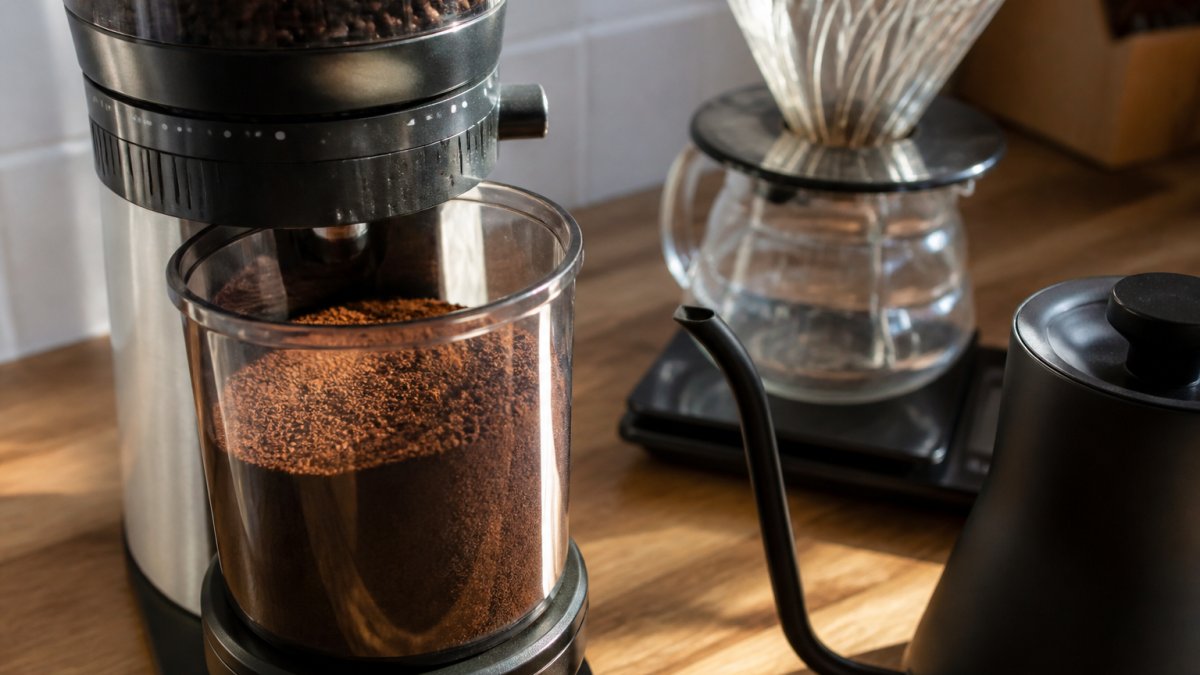
Here is a starting reference for common brewers:
| Brew Method | Grind Size | Rough Texture |
|---|---|---|
| French press | Coarse | Sea salt |
| Cold brew | Very coarse | Peppercorns |
| Drip machine | Medium | Table salt |
| Pour-over | Medium-fine | Fine sand |
| Espresso | Fine | Powdered sugar |
A burr grinder produces more even particles than a blade grinder, and evenness is what makes extraction predictable. Grind right before you brew. Ground coffee loses aroma fast, so a minute of grinding beats a week of stale pre-ground.
Dial In the Coffee-to-Water Ratio
The coffee-to-water ratio is the weight of coffee relative to the weight of water, and it decides whether your cup tastes weak, balanced, or overwhelming. Start with 1 gram of coffee per 16 grams of water by weight. That works out to roughly 1 to 2 tablespoons of ground coffee per 6 ounces of water, but a kitchen scale removes the guesswork.
If a cup tastes thin, add coffee before you add more of anything else. If it tastes harsh and heavy, add water. Change one variable at a time so you know what worked.
Most home brewers never weigh anything, which is why their coffee tastes different every morning. Scoops vary by grind and density. A scale costs less than a bag of beans and eliminates that inconsistency for good.
Why Does My Coffee Taste Bitter? Fix the Brew, Not the Bean
Bitter coffee is almost always over-extracted, meaning hot water pulled too many compounds out of the grounds. The usual causes are a grind that is too fine, water that is too hot, or a brew time that ran long. Fix the process before you blame the beans.
Work through it in order:
- Grind coarser and brew again. This is the fastest fix.
- Lower the water temperature slightly if your brewer runs hot.
- Shorten the brew time if your method allows it.
Sour, sharp coffee is the opposite problem: under-extraction. Grind finer or extend the brew. The goal is the middle ground where sweetness and acidity balance.
Watch out: if bitterness persists after you have adjusted grind, temperature, and time, the beans themselves may be dark-roasted past the point where origin flavors survive. A lighter or medium roast often tastes sweeter and more layered.
Use Water You Would Actually Drink
Water makes up most of your cup, so its taste matters as much as the beans. If your tap water tastes like chlorine or minerals, your coffee will too. Filtered water is the simplest fix, and it costs almost nothing compared to upgrading equipment.
Aim for water that tastes clean and neutral. Very hard water mutes flavor and can scale your kettle. Distilled water is the other extreme: it lacks the minerals that help extraction, so it can produce a flat cup. Bottled filtered water or a simple carbon filter hits the middle.
Try a side-by-side test. Brew one cup with tap water and one with filtered water using the same beans and grind. The difference usually settles the argument.
Keep Temperature and Timing Consistent
Consistency is what separates a good cup from a good cup you can repeat. Water should sit between 195°F and 205°F during brewing, just below a rolling boil. If you pour straight off the boil, you scorch the grounds and pull out bitterness.
Time your brew and write down what you did. Note the grind, the ratio, the temperature, and the total brew time. When a cup turns out well, you have a recipe. When it does not, you have a variable to change.
Cold brew removes temperature from the equation entirely. Steep coarse grounds in cold water for 12 to 18 hours, and the result is smooth and low in acidity. Our Cold Brew Coffee is a dark French roast ground coarse specifically for that method, so timing stays steady and the extraction stays even.
Clean Your Gear More Often Than You Think
Old coffee oils turn rancid and coat every surface they touch. A dirty brewer, grinder, or French press will make fresh beans taste stale no matter how carefully you brew.
Clean your equipment on a schedule:
- Daily: rinse the carafe, dripper, and press.
- Weekly: wash removable parts with hot water and a little dish soap.
- Monthly: deep-clean the grinder and run a descaling cycle on your machine.
Residue builds up in places you cannot see, especially in grinder burrs and machine reservoirs. If your coffee suddenly tastes flat or dusty and nothing else changed, clean everything before you buy new beans.
Find Your Perfect Roast at Eden's Garden Coffee
The seven fixes above cover the whole chain: fresh beans, correct grind, measured ratio, controlled temperature, clean water, consistent timing, and clean gear. Get those right and home coffee flavor stops being a guessing game.
At Eden's Garden Coffee, we roast to order so beans reach you close to their peak. Our single-origin lineup gives you room to explore. The medium-light Ethiopia Natural brings milk chocolate, fruit, and caramel, while the bold, syrupy Sumatra delivers dark chocolate and earthy depth. Both are $24.99, roasted fresh and shipped to your door.
For guidance on brewing standards and water quality, the Specialty Coffee Association publishes resources worth bookmarking, and the USDA covers food safety basics for storage.
Frequently Asked Questions
How can I make my coffee taste better at home without buying new equipment?
Three free changes do most of the work: weigh your coffee and water instead of scooping, grind just before brewing if you already own a grinder, and clean your brewer. A common starting point is 1 to 2 tablespoons of ground coffee per 6 ounces of water, then adjust to taste. Also check your beans: coffee past its roast date by several weeks tastes flat no matter how good your technique is.
What is the best coffee-to-water ratio for brewing?
A practical starting point is 1 gram of coffee to 15 to 17 grams of water, which lands near 1 to 2 tablespoons of grounds per 6 ounces of water. If your cup tastes weak or watery, tighten the ratio toward 1:15 before changing anything else. If it tastes harsh, loosen toward 1:17. Weighing on a kitchen scale beats scooping because scoop size varies wildly between grinds.
Why does my coffee taste bitter even when I use good beans?
Bitterness usually comes from over-extraction: water that is too hot, a grind that is too fine, or a brew time that runs long. It can also come from a dirty brewer, since old oils turn rancid. Try a coarser grind or a shorter brew time first, then check water temperature. Dark roasts also read as bitter more easily than medium roasts, so a medium like Brazil Santos can soften the cup.
Does freshly ground coffee really taste better than pre-ground?
Yes, and the gap is noticeable. Ground coffee loses aromatic compounds quickly once exposed to air, so pre-ground bags taste flatter within days of opening. Grinding right before brewing preserves those aromas in the cup. If you do not own a grinder, buy smaller bags and keep them sealed, or ask for whole bean and have it ground in small batches you will finish within a week or two.
How often should I clean my coffee maker?
Rinse the carafe and brew basket daily, and do a deeper clean of the reservoir and internal parts about once a month, or more often if you brew daily. Old coffee oils and mineral buildup from tap water turn bitter and stale, and they transfer straight into your next cup. A simple vinegar-and-water cycle followed by two plain water runs handles most drip machines.
Getting consistently great coffee at home comes down to controlling a few variables and buying beans fresh enough to reward the effort. Eden's Garden Coffee roasts every order to date, ships fast, and offers single origins from Brazil, Ethiopia, Guatemala, and Sumatra so you can find the profile you love. Visit Eden's Garden Coffee to explore the lineup and find your perfect roast.
